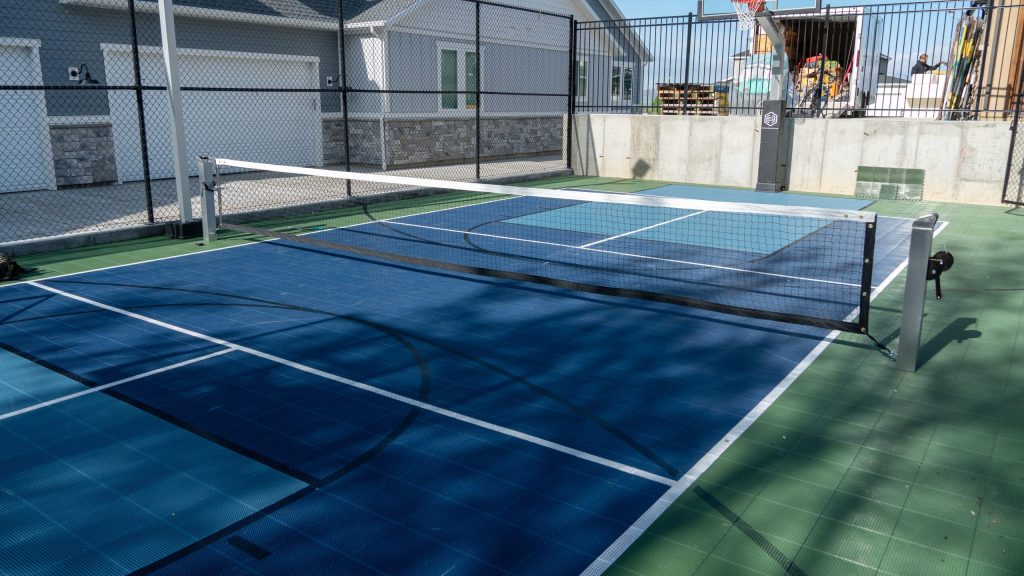
A pickleball court doesn’t announce its quality with fanfare. You don’t walk onto a great one and think, wow, this is impressive. Instead, you just start playing. Your feet move without hesitation. The ball behaves the way you expect it to. You finish a game feeling pleasantly tired, not annoyed or sore. That quiet ease is the result of dozens of decisions most players never see—and rarely think about.
Behind every court that feels “right” is a process that blends materials, people, patience, and a bit of humility. Because building a pickleball court isn’t about showing off. It’s about getting out of the way of the game.
It Starts With the Surface, Not the Lines
When people first talk about courts, they often jump straight to dimensions and markings. But long before paint ever touches the ground, the surface itself deserves attention. The pickleball court surface material you choose shapes everything that follows—how the ball bounces, how players move, and how the court ages over time.
Concrete and asphalt are common bases, but they’re only the foundation. What sits on top matters just as much. Acrylic coatings, cushioned layers, and modular systems each bring a different personality to the court. Some feel firm and fast. Others soften impact and reduce stress on joints. None are universally perfect.
The real question isn’t “what’s best?” It’s “what’s best here?” Climate, usage, and maintenance expectations all influence whether a surface becomes a long-term asset or a quiet headache.
Why Installation Is More Than Following Steps
There’s a tendency to think of court building as a checklist: prep ground, lay surface, paint lines. But anyone who’s watched a proper build knows that the rhythm matters as much as the steps themselves.
installing pickleball court surfaces is about timing and restraint. Coatings need the right conditions to cure properly. Bases must be given time to settle. Rushing one stage because the schedule looks tight can undo weeks of careful preparation.
This is where experience shows. Skilled teams know when to pause, even if everything looks ready on the surface. They’ve seen what happens when corners are cut, and they understand that a few extra days at the start can save years of frustration later.
The Invisible Work That Makes or Breaks a Court
Players don’t talk about drainage or compaction, but those details quietly decide whether a court lasts. Poor water management leads to puddles, cracks, and slippery patches. Uneven bases create dead spots where the ball behaves strangely.
None of this is glamorous. You won’t get compliments for a well-compacted sub-base. But when a court survives heavy rain, hot summers, and constant play without complaint, that invisible work has done its job.
Good courts aren’t built to impress inspectors. They’re built to endure real life.
Who Builds It Matters More Than What’s Promised
Materials and designs matter, but people matter more. Choosing among pickleball court contractors often comes down to trust rather than brochures. The ones worth listening to tend to ask uncomfortable questions early. They want to know how often the court will be used. Who will play on it. What happens to the area in winter, or during heavy rain.
These conversations can feel slow, even frustrating, especially when you’re eager to see progress. But they’re where problems get solved before they exist. Contractors who rush this stage usually rely on standard solutions that may not fit your site at all.
The best ones don’t oversell. They explain trade-offs plainly. They’re honest about limitations. And they don’t promise perfection—just consistency.
Outdoor Courts Live With Consequences
Outdoor pickleball courts face constant stress. Sun fades colours and dries surfaces. Temperature swings test flexibility. Leaves, dust, and moisture challenge traction.
A thoughtful outdoor build accepts that reality. Slight slopes guide water away. Surface textures balance grip with comfort. Materials are chosen for resilience, not just appearance. Even court orientation can matter, reducing glare during peak playing hours.
Courts that ignore these factors often look great on opening day and slowly decline. The ones that plan for them age quietly, without drama.
Indoor Courts Aren’t Automatically Easier
Indoor courts avoid weather, but they come with their own complexities. Shared spaces mean heavier foot traffic and multiple sports competing for the same floor. Noise, markings, and safety all matter.
Here, subtlety wins. Overly specialised surfaces can cause issues for other users. Too generic, and pickleball suffers. The best indoor courts strike a balance that keeps everyone reasonably happy—a harder goal than it sounds.
What Players Feel but Don’t Articulate
Most players won’t comment on materials or installation techniques. What they notice is how the court makes them feel. Does it inspire confidence? Do their joints hold up after a long session? Does the ball behave the same near the baseline as it does at the net?
When the answers are yes, players keep coming back. When they’re not, the court slowly empties, even if no one can quite explain why.
That’s the quiet power of good design and careful construction. It shapes experience without demanding attention.
Ending With the Long View in Mind
Building a pickleball court isn’t a one-time act. It’s a decision that plays out over years, through thousands of rallies and countless conversations on the sidelines. People will judge it not by how quickly it was finished, but by how reliably it serves them.
If there’s one guiding principle worth holding onto, it’s this: slow down early so you don’t have to fix things later. Ask questions. Respect the process. Choose people who care about how the court will feel long after the ribbon is cut.
 Site Title
Leave a comment